


Spanish
Key:
Subject | Object | Verb | Adjective | Adverb1
At the StoreBarista:
Hola.
Hello. Welcome. Do you need help?Bienvenida.
¿Necesitas ayuda?Bienvenidos is the most common way to say welcome, but, in this case, the barista is speaking to one female, so he used bienvenida. In Spanish, adjectives change endings based on someone’s gender. -a = one female, -o = one male, -as = more than one female, and -os = a group that includes at least one male. So, if there’s a group of 99 females and one male (lucky guy), it would still be bienvenidos.
In Spanish, you can often “drop” the subject because the verb implies who the speaker is talking about.
So, the -as in Necesitas implies that the speaker is talking about you. You also don’t need the Do as it is also implied in the question marks and the inflection of the speaker’s voice.
The one Spanish word, Necesitas, does all three jobs of the three English words: Do, you, and need. Pretty cool, huh?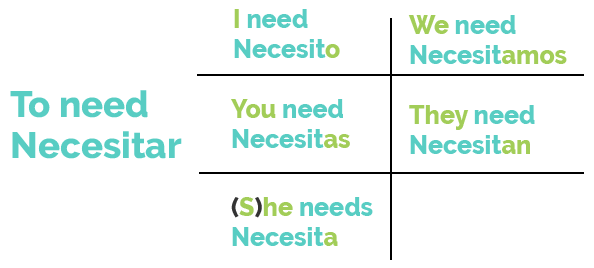 Audio
Audio
Amanda:
Sí,
Yes, help me, please. I like this store a lot. I want a coffee. How much does it cost?ayúdame
, por favor. The verb ayudar (to help) is used here in the Affirmative form, also known as the Command form. In Spanish, commands can add the object of the command to the end of the verb. Another acceptable way to say “Help me” is “Me ayuda.”
Me gusta
mucho esta tienda. In Spanish, the verb, gustar (to like) literally translates to it pleases me. So, the store is doing the action (pleasing) to the speaker, Amanda. Therefore, the verb gustar conjugates (changes) based on the subject doing the pleasing. If the sentence said, “I like these stores a lot,” it would translate to, “Me gustan mucho estas tiendas.” If you like multiple things, use the verb gustan.
Quiero
un café. Just like Necesitas in the first line, Amanda was able to drop the subject because the -o in the verb Quiero implies that she is talking about herself.
Querer is a stem-changing verb, meaning that the conjugation is irregular. In every conjugation (except nosotros), there is an i added before the first e.
¿Cuánto cuesta?
Again, it’s important to notice what the subject of the sentence is because that affects how you’re going to conjugate the verb. In this sentence, “¿Cuánto cuesta?,” the subject is the implied coffee because it is the thing that is doing the action, (costing). This is important to note because if the subject was plural, the verb cuesta would change to cuestan.
LITERAL TRANSLATION. Audio
Barista:
Que bueno. El precio es cinco dólares.
Great. The price is five dollars.This is a simple example of when English and Spanish syntax (sentence structure) line up exactly: Subject | verb | object. Don’t let this throw you off, though. The syntax isn’t always like this.
Keep in mind that this example uses American dollars (USD), dolares but the country that you’re visiting may not accept it. Here’s a list of Spanish-speaking countries and their currencies: 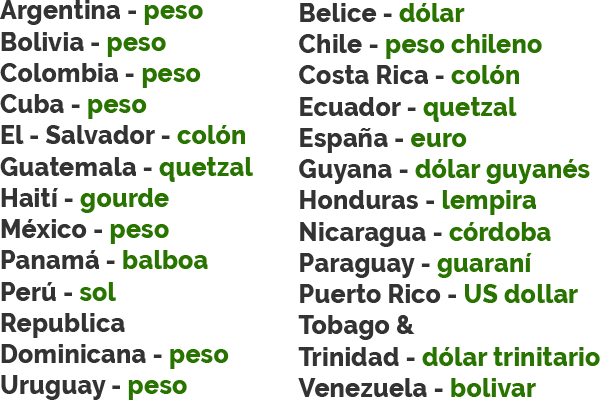 Audio
Audio
Amanda:
I’m sorry, madam, . , please?
Lo siento
, señora, . ¿, por favor? ¿?The literal translation of Lo siento is I feel it with the -o in siento implying the subject of yo.
In Spanish, there are two different ways of saying you, Usted and tú. In this example, Habla, Amanda is using usted.
Usted is generally used when speaking to someone that you don’t know very well or is in a respectable position, such as a professor or doctor. Amanda is using it here to be respectful to the barista.
Tú is used with friends and acquaintances. The barista used it with Amanda to be more conversational and friendly while asking her, Necesitas ayuda.
Notice that the verbs are conjugated differently based on which subject is used, even for usted and tú which essentially mean the same word, you.
Audio
Barista:
No, I don’t speak English. It costs five dollars.
No, no hablo
inglés. Cuesta cinco dólares.It may seem strange to say No back-to-back in the same sentence, but it’s not a typo. In Spanish, verbs become negative by simply adding no before the verb. So, the first No (before the comma) was answering the question and the second no (after the comma) has the purpose of making the verb, hablo, negative.
If the speaker chose to include the subject (remember it’s optional), the sentence would read as follows: No, yo no hablo inglés.
LITERAL TRANSLATION. Audio
Amanda:
Entiendo, pero es
, but it’s too much money. I only have three. So, do you have something cheaper?demasiado dinero
. Solo Demasiado is an adjective describing dinero.
In Spanish, adjectives change endings based on the noun that they’re describing. If the object was feminine (with an -a ending) the adjective would also end with -a.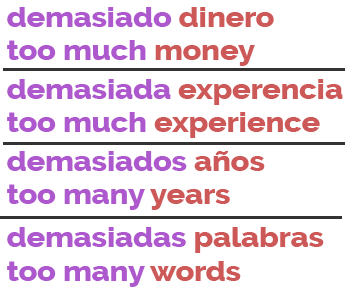
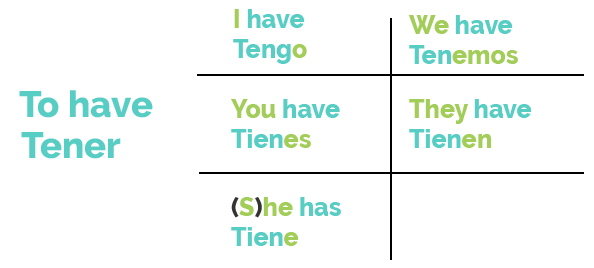
tengo
tres. ¿Entonces, tiene algo más barato?Tengo is an irregular verb in many ways. The base verb is tener, but a lot happens to it when it conjugates. Try to memorize this conjugation chart.
LITERAL TRANSLATION. Audio
Barista:
Sí, tenemos un cafe pequeño por tres.
Yes, we have a small coffee for three.LITERAL TRANSLATION. Audio
Amanda:
Perfecto.
Perfect. I want to buy it, please.Quiero comprarlo
, por favor.Comprarlo is a combination of the infinitive of a verb and a direct object. You can only add the direct object to the end of a verb when it is in its infinitive form, meaning not conjugated. A tip to see if a verb is still in the infinitive form is to see if it still ends with -er, -ar, or -ir. If it does, it hasn’t been conjugated yet and the direct object that it’s affecting can be added onto the end. If the verb is conjugated
, the direct object goes before the verb. So, this phrase could be rewritten as, “Lo quiero comprar.”LITERAL TRANSLATION. Audio
Barista:
Gracias. Adios.
Thank you. Goodbye.LITERAL TRANSLATION. Audio
2
IntroductionsAmanda:
¿Hola, cómo estás?
Hello, how are you? My name is Amanda.Me llamo Amanda.
Llamarse is yet another reflexive verb, which may cause some confusion for new Spanish learners. The direct translation of me llamo Amanda is, “I call myself Amanda. Weird, I know, but it’s a very common way to introduce yourself. It’s interesting due to the fact that the object and the subject are both the person being introduced. So, if someone asked what your brother’s name is, you would respond with, “Se llama Enrique.” “He calls himself Enrique“.
LITERAL TRANSLATION. Audio
Hector:
I’m well, thanks. I’m Hector. Where are you from?
Estoy bien
, gracias. If you look at the next sentence in this section, you’ll see that Hector uses both estoy and soy to say the phrase I am. Estoy comes from the verb estar, meaning to be. Soy comes from the verb ser, also meaning to be. So, what’s the difference?
Think of estar as temporary and ser as permanent. Below is a list of the different use cases for ser and estar.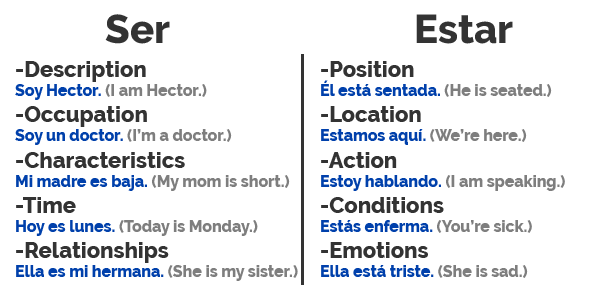
Yo soy
Hector. ¿De dónde eres?Now that you understand the different use cases for ser and estar, it’s time to learn the different conjugations.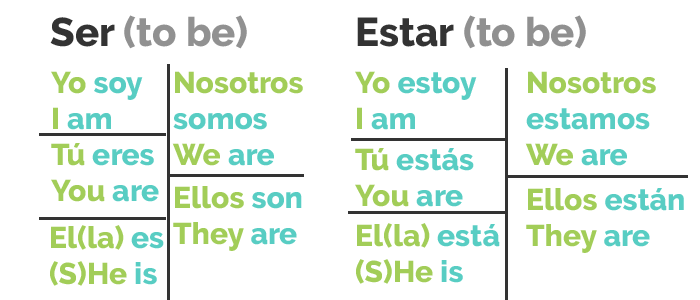
LITERAL TRANSLATION. Audio
Amanda:
Soy de los Estados Unidos y vivo en Florida ahora. Esta es mi primera vez en Columbia desde que
I’m from the United States and I live in Florida right now. This is my first time in Columbia since I went to Bogota two months ago. I arrived yesterday. Do you live here?fui
a Bogotá hace dos meses. Yo Fui is the first use of the preterite form. Preterite simply means past tense. Fui is the preterite form of the verb ir, which is an irregular verb in both tenses.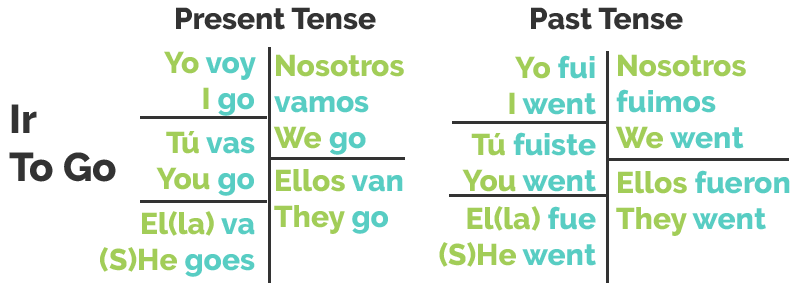
llegué
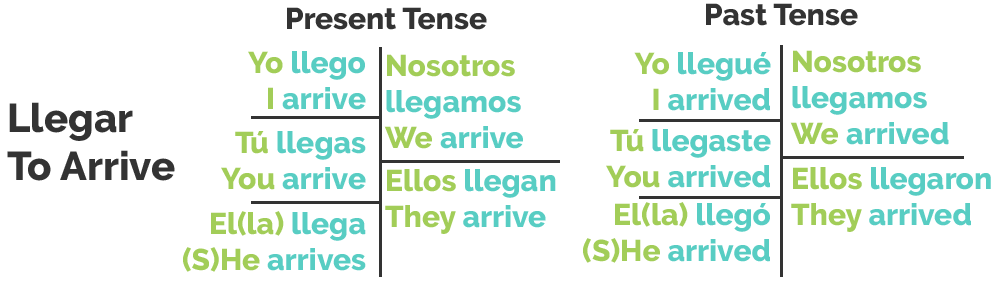
ayer. ¿Vives aquí?Llegué is in the preterite, one of the possible past tenses in Spanish. For the verb llegar, the yo conjugation (llegué) is irregular. This has a reason, though. If llegar followed traditional preterite conjugation standards, it would turn into llege and lose the “g” sound. In Spanish, a -ge is pronounced like an “h” sound in English. The u and accent mark over the e are added to maintain that hard g sound. Hover over the question mark icon at the end of the sentence to listen to the audio.
LITERAL TRANSLATION. Audio
Hector:
Sí, soy de aquí, pero soy estudiante en la universidad ahora. Estoy aquí para visitar a unas amigas.
Yes, I’m from here, but I’m a college student right now. I’m here to visit some friends.LITERAL TRANSLATION. Audio
Amanda:
Yo también. Me quedo aquí por unas dias. Voy a una fiesta esta noche con mis amigos. Están allí en nuestra mesa. ¿Quieres ir a la fiesta conmigo?
Me too. I’m staying here for a few days. I’m going to a party tonight with my friends. They’re over there at our table. Do you want to go to the party with me?LITERAL TRANSLATION. Audio
Hector:
Sí, me gustaría ir, pero no puedo dejar a mis amigos. Ellos están en el baño.
Yeah, I would like to go, but I can’t leave my friends. They’re in the restroom.LITERAL TRANSLATION. Audio
Amanda:
Nosotros podemos ir juntos.
We can go together.LITERAL TRANSLATION. Audio
Hector:
Genial. Tal vez puedo ir. ¿Por qué hay una fiesta?
Great. Maybe I can go. Why is there a party?LITERAL TRANSLATION. Audio
Amanda:
Hoy es el cumpleaños de mi amigo. Él tiene veintiún años.
Today is my friend’s birthday. He’s twenty one.LITERAL TRANSLATION. Audio
Hector:
¿De verdad? Mañana es el cumpleaños de mi hermana. Ella tiene veintinueve años. ¿Dónde es la fiesta? ¿Está lejos? ¿Cuándo es?
Really? Tomorrow is my sister’s birthday. She’s twenty nine. Where is the party? Isit far? When is it?LITERAL TRANSLATION. Audio
Amanda:
Es en una discoteca. Creo que es en dos horas.
It’s at a club. I believe it’s in two hours.LITERAL TRANSLATION. Audio ][/audio]
Hector:
Chévere, puedo comprar tu próxima bebida antes de salir.
Cool, I can buy your next drink before we leave.LITERAL TRANSLATION. Audio
Amanda:
Gracias, pero esta es mi última cerveza.
Thanks, but this is my last beer.LITERAL TRANSLATION. Audio
3
At the RestaurantAmanda:
Amigo, tengo hambre. Tengo que comer pronto. ¿Te gustaría comer y beber después del trabajo?
Friend, I’m hungry. I have to eat soon. Would you like to eat and drink after work?LITERAL TRANSLATION. Audio
Miguel:
Sí, yo normalmente como y bebo alrededor de las siete.
Sure, I normally eat and drink around seven.LITERAL TRANSLATION. Audio
Amanda:
Hay un buen restaurante cerca de nuestro hotel. ¿Te gusta paella?
There’s a good restaurant near our hotel. Do you like paella?LITERAL TRANSLATION. Audio
Miguel:
Me encanta paella. Yo fui al restaurante hace dos semanas y la comida es muy deliciosa. Tengo que trabajar hasta las seis y media. Despues, vámonos.
I love paella. I went to that restaurant two weeks ago and the food is delicious. I have to work until 6:30. After,we‘ll go.LITERAL TRANSLATION. Audio
Amanda:
¿Puedes darme direcciones? ¿Necesito ir a la derecha o a la izquierda?
Can you give me directions? Do I need to go right or left?LITERAL TRANSLATION. Audio
Miguel:
Ninguna. Necesitas seguir derecho.
Neither. You need to continue straight ahead.LITERAL TRANSLATION. Audio
* Luego, en el restaurante ** Later, in the restaurant *
Amanda:
Perdón, señor. ¿Necesito una carta—tienes una? Gracias. ¿La paella me parece muy buena, pero esta palabra aquí. ?
Excuse me, sir. I need a menu—do you have one? Thank you. The paella seems very good, but I don’t know this word. How do you say it in English?LITERAL TRANSLATION. Audio
Server:
La palabra es camarón, que significa shrimp en inglés.
That word is camarón, which means shrimp in English.LITERAL TRANSLATION. Audio
Amanda:
Está bien, aunque la paella me parece deliciosa, quisiera este plato de pollo y arroz con un vaso de agua, por favor.
Okay, even though the paella seems delicious, I would like this dish of chicken and rice with a glass of water, please.LITERAL TRANSLATION. Audio
* Después de comer ** After eating *
Server:
¿Cómo estaba tu comida?
How was your food?LITERAL TRANSLATION. Audio
Amanda:
Excelente. La cuenta, por favor.
Excellent. Check, please.LITERAL TRANSLATION. Audio
Miguel:
¿Quién va a pagar?
Who is going to pay?LITERAL TRANSLATION. Audio
Amanda:
Yo puedo pagar.
I can pay.LITERAL TRANSLATION. Audio
Vocabulary List
- Quién Who
- Qué What
- Cuándo When
- Dónde Where
- Por qué Why
- Comó How
- Cuánto How much
- No entiendo I don’t understand
- Más despacio, por favor. More slowly, please.
- Lo siento/perdón Sorry
- ¿Puede repetir, por favor? Can you repeat that?
- ¿Cómo se dice ____ en español? How do you say ____ in Spanish?
- No sé I don’t know
- ¿Qué significa ____? What does ____ mean?
- Ayúdame Help me
- Puedes You can
- ¿De verdad? Really?
- Quiero I want
- Quieres You want
- Necesito I need
- Tienes You have
- Tiene You have (usted)
- Tenemos We have
- Tengo que I have to
- Me gusta(n) I like
- Me voy (Voy a) I go(ing to)
- Te gustaría You would like (Would you like…?)
- Fui I went
- Yo soy I am
- Es It is
- Comer Eat
- Beber Drink
- Trabajo I work
- Vivo I live
- Me quedo I stay
- Comprar Buy
- Me llamo My name is
- Necesitas You need
- Tengo I have
- Te gusta(n) You like
- Puedo I can
- Podemos We can
- Nos vamos (Vamos a) We go(ing to)
- Me gustaría I would like
- Tú eres You are
- Estoy I am (estar)
- Estás You are (estar)
- Está It is (estar)
- Hablo I speak
- Habla/Hablas You speak
- Como I eat
- Bebo I drink
- Vives You live
- Creo que I believe
- Tengo hambre I’m hungry
- Perdón Excuse me
- Por Favor Please
- Nuestro/Nuestra Our
- Entonces Then
- Ahora Now
- Luego Later
- Después After
- Desde Since
- Aquí Here
- Hay There is/There are
- Demasiado/Demasiada Too much
- Solo Only
- Mucho Very much (A lot)
- Juntos/juntas Together
- Conmigo With me
- Fiesta Party
- Restaurante Restaurant
- Hotel Hotel
- Comida Food
- Agua Water
- Esta noche Tonight
- Pronto Soon
- Gracias Thank you
- Hola Hello
- Señora Madam
- Señor Sir
- Adios Goodbye
- También Also/Too
- Ayuda Help
- Yo I
- Tú You
- Nosotros We
- Ellos/Ellas They
- Mi My
- Tu Your
- Ahí/Allí/Allá There
- Antés Before
- Pero But
- Dinero Money
- Hasta Until
- Años Years
- Él/Ella He/she
- Hoy Today
- Mañana Tomorrow
- Ayer Yesterday
- Próximo Next
- Última Last
- Tal vez Maybe
- Muy Very
- Aunque Even though (although)
- Algun(os/as) Some
- Izquierdo Left
- A la derecha Right
- Derecho Straight
- Direcciones Direction
- Cerca Near
- Lejos Far